

Hardfacing versus overlay welding
Hardfacing applies extremely hard, wear-resistant materials (like carbides) to focus on abrasion/impact resistance, often in thinner layers at wear points, while overlay welding (or cladding) applies a broader range of tougher alloys (sometimes similar to base metal) for corrosion, heat, or general wear, often as a thicker, full-surface coating.
The key difference lies in material selection, deposition thickness, and primary goal:
hardfacing = maximum hardness for wear
overlay = versatility for corrosion/heat/wear, often with a thicker layer.
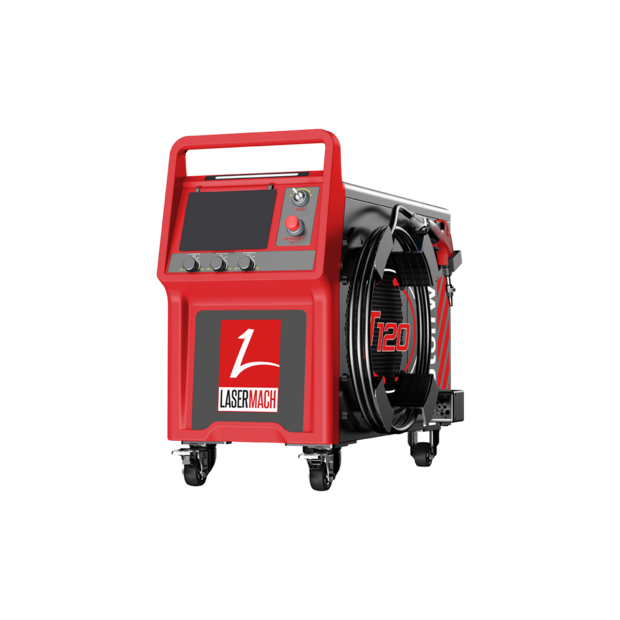
Laser Cladding/Harfacing is a weld build-up process, and a complementary coating technology to thermal spray.
It is increasingly used instead of PTA (Plasma Transferred Arc) welding and easily outperforms conventional welding methods like TIG (Tungsten Inert Gas) for advanced weld repair applications.
In laser cladding, the laser beam is focused on the work piece with a selected spot size. The powder wire material is carried through a nozzle into the melt pool. The laser optics and nozzle are moved across the work piece surface to deposit single tracks, complete layers or even high-volume build-ups.
Key characteristics
- Perfect metallurgically-bonded and fully dense coatings
- Minimal heat affected zone and low dilution between the substrate and filler material, resulting in functional coatings that perform at reduced thickness. Fewer layers are required for equivalent performance.
- Fine, homogeneous microstructure resulting from the rapid solidification rate, that promotes wear resistance of carbide coatings.
- Edge geometries can be coated and built-up with welded deposits.
- Near net-shape weld build-up requires little finishing effort.
- Extended weldability of sensitive materials like carbon-rich steels or nickel-based superalloys that are difficult or even impossible to weld using conventional welding processes.
- Post-weld heat treatment is often eliminated as the small heat affected zone minimizes component stress.
- Excellent process stability and reproducibility because it is numerical controlled welding process.